
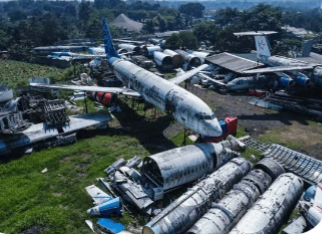
Six decades, 62 airlines, and the same ending
Some stories in Nigeria do not need fresh data to be true. You only need to remember the names.
Bellview. Fessy Royal, Sosoliso. Chanchangi. Virgin Nigeria. IRS. EAS. Associated Aviation. Okada Air. Nigeria Airways.
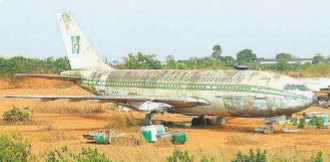
If you are over 35 and you have ever flown within Nigeria, you have likely stood on the tarmac with one of them. You have probably had a colleague, a friend, an uncle who built a career around one of them. And you have definitely heard the same line when they vanished: “Fuel cost. Forex. Government.”
Since 1960, no fewer than 62 airlines have come and gone in Nigeria. Sixty-two. In sixty-six years. That is almost one airline funeral every year since independence. At some point, “bad luck” stops being an explanation and starts sounding like denial. This is not a run of misfortune. It is a design flaw we have refused to fix.
Nigeria Airways should have been our warning. At its peak in 1985, it moved 2.1 million passengers. It was a national institution, a flag carrier with routes, prestige, and a fleet that mattered. By the first quarter of 2003, it was moving 10,000 passengers. Ten thousand.
When government finally ended the suffering in 2003, the debts were over $528 million. That was after $200 million had already been poured in during its last decade to keep it breathing. By the end, investigators found fraud, misappropriation in billions of naira, and only one functional aircraft left on the ground.
We did not just lose an airline. We lost the blueprint for what not to do. And then we did it again.
In the last 24 years alone, at least 20 carriers have shut down. The list reads like a roll call of broken dreams: Flash, Kabo, Jambo Express, Savannah, Albarka, Intercontinental, Nicon, Falcon, Zenith, Barnax, Space World, Dasab, Fresh, Triax, Freedom, Concord, Air Taraba. Operators call it a “stifling operating environment.” Passengers call it cancelled flights and lost money. Staff call it unpaid salaries.
And if you ask any aviation journalist or airline CEO why they keep dying, the answers are rehearsed: fuel is too high, forex is killing us, maintenance is expensive, infrastructure is weak, policy changes every election cycle, and no bank will lend to us at a rate that makes sense.
All of that is true. Jet fuel prices have more than quadrupled in recent times, forcing carriers to cut unprofitable routes and reschedule flights. Supply shortages are now disrupting crew rotations, pushing pilots beyond duty limits and raising safety questions. Fuel is one of the biggest line items on any airline’s books, and even with Dangote refinery supplying more volumes locally, the price relief has not come.
Forex volatility means spare parts, insurance, and lease payments, all priced in dollars, can double overnight in naira terms. Maintenance costs bite harder because many fleets are aged. Infrastructure strains at airports add delays, which add costs. And after the spate of crashes in the early 2000s, the Nigeria Civil Aviation Authority (NCAA), said no airline could operate with just one aircraft, which should have been good for safety but became another pressure point for thinly capitalised carriers.
But strip away the headlines and you will see one common denominator: no asset base, no shock absorber.
Nigerian airlines have mostly been built on leases, short-term charters, and cash that is meant to last only to the next cycle. When you own nothing, every storm lands directly on your cash. Load factors fall, the naira slides, fuel spikes, and the lessor still wants his money on the 1st. There is no owned hangar to sell, no aircraft equity to borrow against, no balance sheet thick enough to take a punch.
Nigeria Airways lived this in slow motion. By 1986 it had 8,500 staff. Monthly earnings were about $5 million. Monthly expenditure was $5.175 million. It was losing money while flying. Political interference in procurement, unpaid services to government agencies, and IATA suspending it for non-payment of dues in 1987 finished the job. Staff-to-aircraft ratios at some points reached 500 people per plane. You cannot fly with that weight.
So we keep repeating the script with different logos. Different founders. Same ending.
And this is not only a management failure. Government has played its part. From the 1970s oil boom, Nigeria Airways expanded routes and fleets on subsidy, not on revenue. When the subsidies could not cover the hole, debt took over. By the mid-1980s it owed $250 million. Liquidation became inevitable.
Today, operators still point to an unfriendly business environment and paucity of funds as the killers. The regulator says fuel prices cannot be capped. Forex swings without warning. Policies shift. Even the plan for a new national carrier has been met with skepticism because the same environment that killed the last 62 is still standing.
But management cannot hide behind government either. The style has been wrong. Too many carriers chased the glamour of routes before they built the boring things: capital, systems, training, and ownership. You cannot build a legacy airline on leases and a thin bank balance. Legacy is built on owned assets, shared infrastructure, deep balance sheets, and institutions that survive turbulence instead of becoming it.
The rest of aviation figured this out the hard way. America consolidated. Delta swallowed Northwest. United merged with Continental. Across the Atlantic, British Airways and Iberia formed IAG. Those mergers were messy. Jobs were lost. Egos were bruised. But the industries that emerged were stronger, better capitalised, and able to weather shocks.
Nigeria has the talent. We have founders who understand this market better than any foreign investor. We have the demand. Road travel is slow and unsafe in many corridors, so air is not a luxury. It is a necessity. Millions fly every year.
What we do not have is scale. And scale will not come from 30 small airlines fighting for the same thin routes with leased aircraft and no capital cushion. It will come from consolidation. State-enforced, yes, but also market-led. Fewer, bigger, stronger carriers with owned assets, shared MRO facilities, and balance sheets that can absorb a forex spike without grounding the fleet.
The last boarding call
We have done the same thing sixty-two times and hoped for a different result. That is not strategy. That is superstition.
The sun of demand is already up. Nigerians need to fly. The mercy of the market has not seized. But a plant cannot grow in a cave by shouting at the sun. It has to position itself where the light can reach it.
For Nigerian aviation, positioning means owned assets, not just leased metal. It means consolidation, not fragmentation. It means policy consistency, affordable financing, and management discipline that puts substance over style.
We have the dreamers. We have the market. What we need now is the courage to build differently.
Otherwise, we already know how this story ends. We have read it sixty-two times.
