
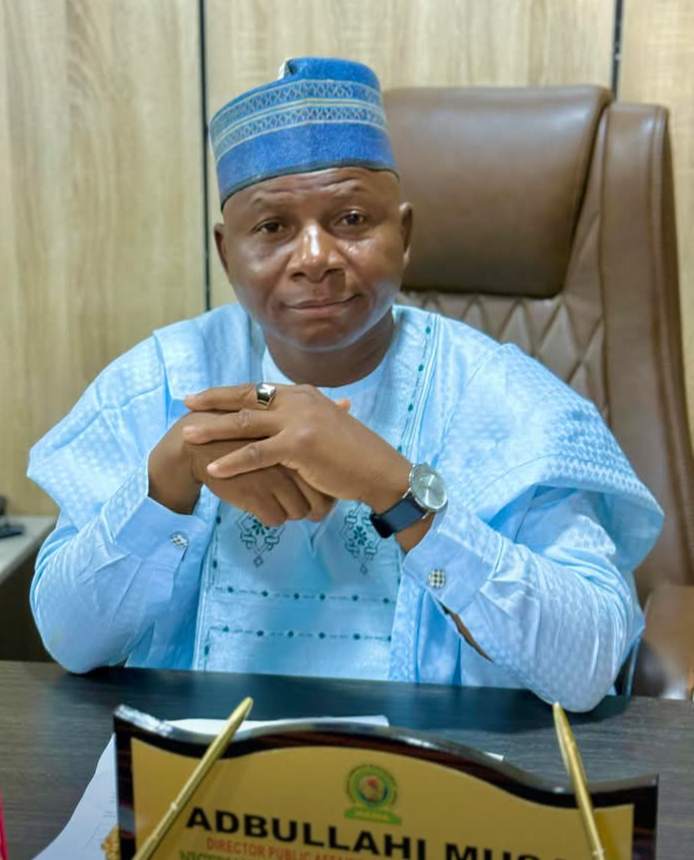
Dr Musa, Director, PACP,, NAMA
In an industry where silence can cause panic and one wrong word can ground a nation, the man entrusted with speaking for Nigeria’s airspace has chosen clarity over noise, facts over speculation, and service over self.
Dr. Abdulahi Musa, Director, Public Affairs and Consumers Protection at the Nigerian Airspace Management Agency, NAMA, is not the pilot in the cockpit. But in many ways, he is the voice passengers hear when the skies get turbulent — not in the air, but in the public space.
In an era when government agencies are often accused of being distant, defensive, or difficult to understand, Dr. Musa has quietly built a reputation as a different kind of spokesman. One who explains, not excuses. One who informs, not intimidates. One who sees public affairs not as a press desk, but as a bridge.
Those who have worked closely with him across aviation circles describe the same thing: a communicator who treats every inquiry like it matters, because to the person asking, it does.
“Dr. Musa understands that air navigation is technical, but public trust is human,” a senior aviation stakeholder who has interfaced with NAMA for over a decade notes. “He translates complex operational issues into language that airlines, passengers, the media and government can all understand. That is rare.”
His approach reflects a deep understanding of what NAMA does. The agency is responsible for managing Nigeria’s airspace — ensuring safe, efficient and seamless movement of aircraft. It is safety-critical work, largely unseen.
When there is a delay, a weather diversion, or an infrastructure upgrade, the public wants answers immediately. Dr. Musa’s job is to provide them without compromising security, without jargon, and without losing the human element.
Colleagues say that is where his background matters. With training and exposure that cut across public administration, communication strategy and consumer protection, he brings both intellect and empathy to the role. He does not just issue statements. He listens first. In meetings with airlines, passenger groups and media houses, he is known to take notes, ask follow-up questions, and return with answers — even when the answer is “we are still working on it, and here is why.”
That posture has earned him quiet respect.

In an industry governed by ICAO standards and technical protocols, he has insisted that the consumer must not be lost in the process. Under his directorate, public affairs and consumer protection are not treated as separate silos. The idea is simple: every communication is a consumer service, and every consumer complaint is a communication opportunity.
It shows in the way NAMA now engages during disruptions. Instead of waiting for speculation to fill the gap, the agency pushes out timely updates. Instead of hiding behind technical terms, it explains in plain language what is being done to restore normalcy. It is not about public relations in the cosmetic sense. It is about public reassurance.
Aviation analysts who track institutional communication in Nigeria point to this shift. “What Dr. Musa has done is professionalize the voice of NAMA,” one Abuja-based transport policy analyst observes. “He has positioned the agency as accessible without being careless, as responsive without being reactive. In a sector where perception affects confidence, that matters a lot.”
Those who know him personally describe a man who is calm under pressure, measured in speech, and deliberate in writing. He does not chase headlines. He chases understanding. And because of that, the headlines, when they come, are usually fair.
For Dr. Musa, the job is bigger than media. It is about protecting the integrity of the agency and the confidence of the flying public.
In his view, communication is also safety. When people understand why a procedure exists, they cooperate. When airlines understand what is being upgraded, they plan better. When government understands what the agency needs, it supports more.
That philosophy is why, within NAMA, he is regarded as more than a spokesman. He is a stabilizer. During periods of operational change, policy shifts, or public concern, his office becomes the point where information is clarified, tensions are lowered, and trust is maintained.
It is not loud work. There are no cameras following him into technical briefings. But the impact is visible. Press statements that are factual and timely. Engagement sessions that are open. A tone that is respectful even when correcting misinformation.
In a public service environment where many hide, Dr. Musa has chosen to stand in front — not for visibility, but for accountability.
Nigeria’s aviation sector is growing. More aircraft, more routes, more infrastructure projects. With growth comes scrutiny. And with scrutiny comes the need for a communicator who can hold the line: accurate, calm, and people-centered.
From a third-party perspective, that is the mark of excellence. Not just knowing what to say, but knowing when, how, and why to say it. Not just defending an institution, but helping the public understand it.
Dr. Abdulahi Musa has become that voice for NAMA. Steady. Informed. Human.
And in an industry where the margin for error is zero, having a voice like that — one that builds trust as carefully as engineers build runways — is not a luxury. It is part of the safety system itself
