
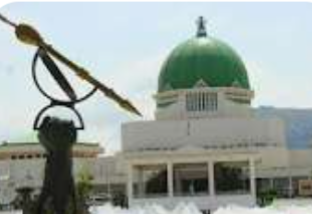
In the quiet of the National Assembly on Friday, the conversation was not about politics. It was about children, classrooms, and the billions of naira meant to keep them safe. For hours, the Senate Ad-hoc Committee on the Safe Schools Initiative sat with two of President Bola Tinubu’s most powerful ministers, demanding answers, asking hard questions, and promising Nigerians that no money allocated to protect schools would be swept under the rug.
Chairman of the Committee, Senator Orji Uzor Kalu, opened the session with a tone that was firm but deliberate. This, he said, was not a witch-hunt. It was duty. Under Sections 88 and 89 of the 1999 Constitution, the Senate has a responsibility to ensure financial discipline and value for money, especially when the lives of students and teachers are involved. “We are not here for a witch-hunt,” Kalu told the room. “Our mandate is to ensure financial discipline, value for money and ultimately protect Nigerian students and vulnerable citizens.”
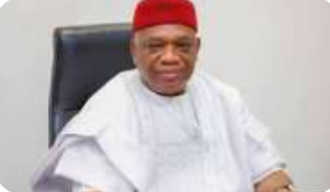
Sen Kalu

What began as an investigation into the implementation and funding of the Safe Schools Initiative has now grown into something much bigger. Preliminary findings pushed the committee to expand its mandate to trace financial flows, donor contributions, operational bottlenecks and accountability frameworks across every ministry and agency linked to the programme. From 2023 to date, the senators want to know how much was budgeted, how much was released, how much came from international partners, and where it all went.
Because school security touches on banditry, terrorism and intelligence, Kalu warned that some parts of the discussions could not be held in public. “We will not discuss sensitive operational issues in public because we do not want to expose information that could be useful to criminals,” he said. But beyond those closed doors, the message to the executive was clear: government is a continuum. Whether funds were released before the current ministers came in or not, the state must account for every kobo.
The first to take the hot seat was the Minister of Education, Dr. Tunji Alausa. He came with his Permanent Secretary, Mr. Abel Olumuyiwa Enitan, and directors overseeing Safe Schools financing and school safety. Alausa did not dodge the timeline. Most of the disbursements under scrutiny, he explained, happened five to seven years ago, long before his tenure. Since he assumed office, he said, the only major releases have been targeted interventions to security agencies like the Nigeria Police Force and the Nigeria Security and Civil Defence Corps, routed through the Ministry of Finance.
But he also came with reforms. One of his first actions, he told the committee, was to push for the Safe Schools financing component to be moved from the Ministry of Finance to the Ministry of Education. The request faced administrative delays, but it has now been completed. Today, he said, the Safe Schools Initiative officially sits in the Ministry of Education, and for the first time there is a full-fledged Safe Schools Department to coordinate policy, implementation and monitoring. “Safe Schools are much broader than physical security,” Alausa explained. “It includes perimeter fencing, solar-powered lighting, water and sanitation facilities, recruitment of school security personnel, deployment of technology and the establishment of effective monitoring systems.” He added that the ministry is working closely with the Office of the National Security Adviser, the DSS, the Armed Forces and the Police to build a comprehensive national framework, because, in his words, the security of children and teachers is non-negotiable for the Renewed Hope Agenda.
Later, the Minister of Finance and Coordinating Minister of the Economy, Mr. Taiwo Oyedele, walked in with his team. He pledged full cooperation. For him, the Safe Schools Initiative is about the future of the country. “We want every student to be able to go to school knowing that the country is able to protect them, and their teachers as well,” he said. Oyedele acknowledged that there have been issues with the timeliness of fund releases and with transparency mechanisms, but insisted that work was already underway to strengthen accountability. Echoing Kalu, he reminded the committee that public officials must take responsibility for the institutions they lead, whether the problems started before their appointment or not. “Whenever we find anything that has not been done properly, it is for us to acknowledge it and find solutions so that going forward, everything will be better and the Nigerian people will be the beneficiaries.”
Speaking to journalists afterward, Oyedele stressed that school safety is a shared burden involving the federal government, state governments and multiple agencies. He also clarified that the Ministry of Finance’s role in managing intervention funds was a product of existing financial structures, not a turf battle. His bigger concern, he said, was prevention. “What is even the priority for us is how we ensure that funding is adequate and monies are released on time so that some of these crimes can be prevented rather than us trying to do damage control.” He also urged Nigerians to be careful with narratives around insecurity, warning that some commentary could unintentionally aid criminals.
The senators were not letting anyone off the hook. Vice Chairman, Senator Sahabi Yau, supported holding sensitive items in executive session but insisted that transparency must still prevail. Senator Anthony Ani put it plainly: institutions must account for past actions so that future officials understand that transparency is not optional. The government, he said, is continuous.
Kalu commended both ministers for honouring the invitations, calling it respect for democratic institutions. But commendation did not mean the probe was over. The committee announced it will now scrutinize budgetary allocations and actual releases, co-funding arrangements, donor funds, and the structural challenges that have slowed disbursement. Proposals for reform will also be on the table.
As the hearing adjourned into a closed session with both ministers, one thing was clear. This is no longer just about auditing old vouchers. It is about restoring confidence in a programme born out of tragedy, after school abductions shook the nation and the world. Parents want to know their children are safe. Donors want to know their money is working. And the Senate, for now, has taken on the job of making sure both are true.
With cooperation pledged from the Ministries of Education and Finance, and with the committee promising to follow the money wherever it leads, Nigerians may soon get the clearest picture yet of how resources meant to protect schools have been managed. For Kalu and his colleagues, the goal is simple: financial discipline, operational efficiency, and schools where learning can happen without fear.
