
Kenya Airways, Emirates, British Airways, Ethiopian — the pattern is too loud to ignore. A national carrier isn’t nostalgia. It’s leverage; reports GBOYEGA ADEOYE
There’s a moment at 2 a.m. in Nairobi when Jomo Kenyatta Airport comes alive. Red tails nose to nose, ground crew moving like choreography, pallets of roses and green beans rolling into Kenya Airways 787s bound for Amsterdam and London. To a tourist it looks like an airline doing its job. To an economist, it looks like a country exporting itself.
That scene explains why the countries that win in aviation almost always have one thing in common: a national carrier they’re willing to back.

Look at Kenya. Kenya Airways has bled money, been restructured, debated, and nearly privatized. Yet no government lets it die. Why? Because KQ moves 70% of Kenya’s perishable exports. Cut the airline and you cut the $1.2 billion horticulture industry overnight. No foreign low-cost carrier will fly fresh flowers to Europe at 3 a.m. on a thin margin. A flag carrier will, because it’s not just chasing profit. It’s protecting a trade route. That’s why Nairobi keeps showing up on the global map — not just as a safari destination, but as a logistics hub.
Fly six hours north and the logic gets bolder. Dubai didn’t have oil money for aviation. It had sand and geography. In 1985, with $10 million and two leased planes, the emirate launched Emirates. Today Emirates and Flydubai turn Dubai International into the world’s busiest airport for international passengers — 87 million people in 2024, most of them just connecting. The airline didn’t grow because Emiratis needed to fly. It grew because Dubai decided aviation would be its port, its highway, its storefront. Every dirham Emirates earns pulls three more dirhams into hotels, finance, and logistics. The airline built the city as much as the city built the airline.

Qatar watched and did the same with *Qatar Airways. When the 2017 blockade shut land borders, Doha didn’t go dark. Qatar Airways kept the country breathing, flying around the blockade, holding trade and diplomacy together. That’s the quiet power of a flag carrier: sovereignty at 35,000 feet. You don’t have to beg for routes when politics shift. You own the metal.
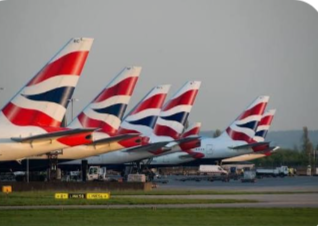
Europe tells the story with a different accent. British Airways hasn’t been fully state-owned since the 80s, but walk through Heathrow Terminal 5 and you still feel the Union Flag. BA commands London’s premium traffic because London is money, and money prefers an airline that speaks its language. Lufthansa and *Air France-KLM are partly privatized too, but when COVID hit, Berlin and Paris didn’t hesitate. Germany put €9 billion into Lufthansa. France and the Netherlands committed €10.4 billion to Air France-KLM. Not charity. Strategy. Lose the airline, lose the hub, and watch Frankfurt or Charles de Gaulle slip down the rankings. Governments understand what spreadsheets miss: connectivity has a value you can’t see until it’s gone.
Africa’s story is the contrast. Nigeria had Nigeria Airways, once flying Lagos-New York, Lagos-London, Lagos-Johannesburg with pride. It collapsed in 2003. Since then, Africa’s biggest economy has been renting connectivity from foreign carriers. Billions leave the country every year in airfare. Lagos remains a spoke, not a hub. Every attempt at “Nigeria Air” stalls, and the opportunity slips.
Then look east to Ethiopia. Ethiopian Airlines is 100% state-owned and stubbornly profitable. It flies to over 130 cities, runs the continent’s best MRO, trains pilots for half of Africa, and built Addis Ababa Bole into East Africa’s gateway. The airline contributes over $1 billion to GDP and employs 17,000 people. One decision — back a national carrier — and an entire ecosystem grew around it. *Rwanda* is copying the playbook with RwandAir and the new Bugesera Airport. Small country, long vision. They’re betting that if you build the airline, the hub will follow.
Even Singapore knew this from day one. Singapore Airlines isn’t just an airline. It’s branding you can board. Backed by Temasek, SIA made Changi the “World’s Best Airport” year after year by feeding it premium traffic no one else could attract. And the United States, though it has no single flag carrier, treats United, Delta and American like strategic assets. Bailouts, slots, diplomatic muscle — that’s a distributed national carrier system.
So strip away the liveries and the loyalty programs and you’re left with a simple truth. Markets don’t build hubs. Nations do. Low-cost carriers are brilliant for moving people within a country. But they don’t open Kinshasa when it’s risky. They don’t fly to Guangzhou to court Chinese investment. They don’t sit in bilateral negotiations arguing for fifth-freedom rights. States do that, through airlines that carry the flag.
A national carrier is a country’s storefront in the sky. It says: we’re open, we’re connected, we’re not waiting for the world to find us. Without one, you export your passengers and import your connectivity. With one, you set the terms.
The map of global aviation power lines up almost perfectly with the map of flag carriers. Kenya, UAE, Qatar, UK, Germany, France, Singapore, Ethiopia. That’s not coincidence. That’s policy written in contrails.
Fly your flag, or someone else will fly theirs over your skies.
