
It costs $81 million today to move a single supertanker of crude from America to Japan. A year ago, it was $9.1 million.
Brent crude, which was $91 in August, averaged $114 in September and touched $131 on September 15 after missiles hit energy infrastructure and choked Saudi Arabia’s export routes.
And somewhere in Ikeja, a passenger is told his 7am flight to Abuja is delayed because there is no Jet A1. A trader in Ladipo is told his spare parts will take another three weeks because ships are avoiding the Red Sea. A tomato farmer in Jos is told the truck fare to Lagos has doubled.
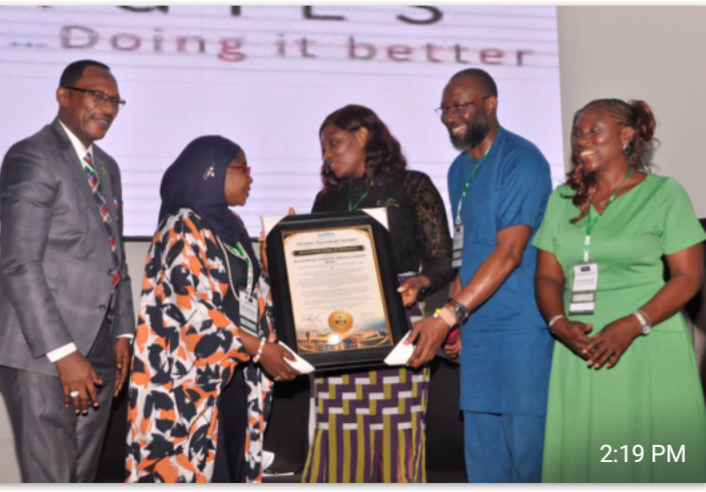
That invisible line that connects a war in the Middle East to a fare hike in Nigeria was the heart of the Second Nigeria Transport Summit 2026 held Friday at Providence Hotel, GRA, Ikeja.
It was not another talk-shop about building more roads. It was a blunt conversation about survival.
Mrs. Pearl Ngwama, the Convener and publisher of JustNet News, opened with numbers that silenced the hall. Quoting the US Energy Information Administration’s October 6 outlook, she said the global energy market has become a weapon. When it shakes, transport is the first to bleed.
“For the transport industry, the consequences are immediate. Airlines face mounting aviation fuel bills; shipping companies contend with higher vessel operating and insurance costs; road haulage operators experience increased fuel expenses. Ultimately, these pressures translate into higher passenger fares, more expensive goods and reduced competitiveness,” she said.
She reminded the audience that according to UNCTAD, over 80% of world trade moves by sea, yet shipping through the Suez Canal is still 70% below 2023 levels as of May 2025 because of the Red Sea crisis. Ships now go around the Cape of Good Hope, travelling 5.9% longer in 2024 than ever before. The cost of insecurity, insurance and longer routes has turned shipping itself into inflation.
The keynote speaker, Dr. Richard Aisuebeogun, former Managing Director of FAAN, took it further. A transport expert who has seen the system from inside, he said Nigeria made a costly mistake: we built a transport system that depends entirely on what we don’t control – imported fuel and imported spare parts.
“Conflicts in major energy-producing regions and along important trade routes have increased the cost of fuel, insurance, shipping and imported transport inputs. For a country whose operators depend on petroleum products and imported technical equipment, these changes can quickly affect service delivery,” he said.
Aviation, he said, is the most exposed. Jet fuel is over 40% of an airline’s cost. He recalled May 2026, when Nigerian airlines were forced to adjust routes, delay and cancel flights because Jet A1 was scarce and expensive. Reports at the time also flagged crew fatigue and financial distress among operators.
But fuel is only half the story. The other half is forex.
“When the domestic currency weakens against major international currencies, operators face higher replacement costs, more expensive maintenance contracts and greater difficulty financing capital-intensive investments,” Aisuebeogun explained.
What does that mean in real life? It means an airline cannot replace an engine on time. A railway cannot buy signaling systems. A port cannot buy cranes. The result is what passengers see daily – higher fares, fewer buses, fewer flights, lower reliability. And when global supply chains break, even the infrastructure we are building stops. Vehicles don’t arrive. Rail components don’t arrive. Airport equipment is stuck at sea. Projects overrun and costs vary.
Yet, and this is where both speakers agreed, the world did not create all our problems. It only exposed them.
Mrs. Ngwama called it thinking in silos. Dr. Aisuebeogun listed it.
Road remains king in Nigeria – carrying almost all passengers and domestic freight – but its condition directly affects national productivity. The roads are deteriorating, drainage is poor, bridges are poorly maintained, congestion is chronic, rural access roads are almost non-existent, and there is weak connection between industrial centres, farms, ports and airports.
Rail, which should be the backbone for moving heavy cargo from Apapa, still struggles with network coverage, poor infrastructure, weak freight capacity, maintenance, security and last-mile connections to ports and distribution centres.
Aviation cannot thrive when surface access to the airport is a four-hour traffic jam. A seaport cannot be competitive when cargo evacuation depends on one bad road.
“We possess considerable advantages – a large domestic market, extensive maritime access, significant agricultural and industrial potential,” Ngwama said, “but these will remain underutilised unless our transport modes function as parts of an integrated system.”
That was her central plea. Nigeria must stop celebrating isolated projects – a new terminal here, a rail line there – and start asking whether they connect. She warned that the African Continental Free Trade Area will mean nothing if a producer in Aba cannot move his goods reliably and competitively to Ghana or Kenya.
So what is the road ahead? It is not just more concrete.
Aisuebeogun said the question Nigeria must answer is no longer how to build more, but how to build a system that is reliable, affordable, safe, integrated, financially sustainable and resilient to external shocks.
Ngwama added that resilience is not just surviving a crisis. It is anticipating it, absorbing it, adapting to it and recovering without shutting down the economy. That requires energy security – reliable fuel supply and energy efficiency – and policy consistency. Investors, she said, need clarity, not frequent policy changes and overlapping agencies fighting over the same space. It also requires technology – digital ticketing, cargo tracking, data sharing and risk assessment.
In the end, the summit spotlighted Bi-Courtney Aviation Services Limited, operator of MMA2, as an example of what private sector participation can do when the environment is right.
The lesson from Ikeja was simple and sobering. Nigeria cannot stop wars abroad or bring Brent down from $131. But it can fix what is within its control – make its ports work, make its rail connect to its ports, make its roads connect to its farms, make its policies predictable, and make its transport modes talk to each other.
Because when the next global disruption comes – and it will – the price will again be paid not in Geneva or Riyadh, but on the streets of Lagos, in the fares at MMA2, and in the markets of Onitsha.
