
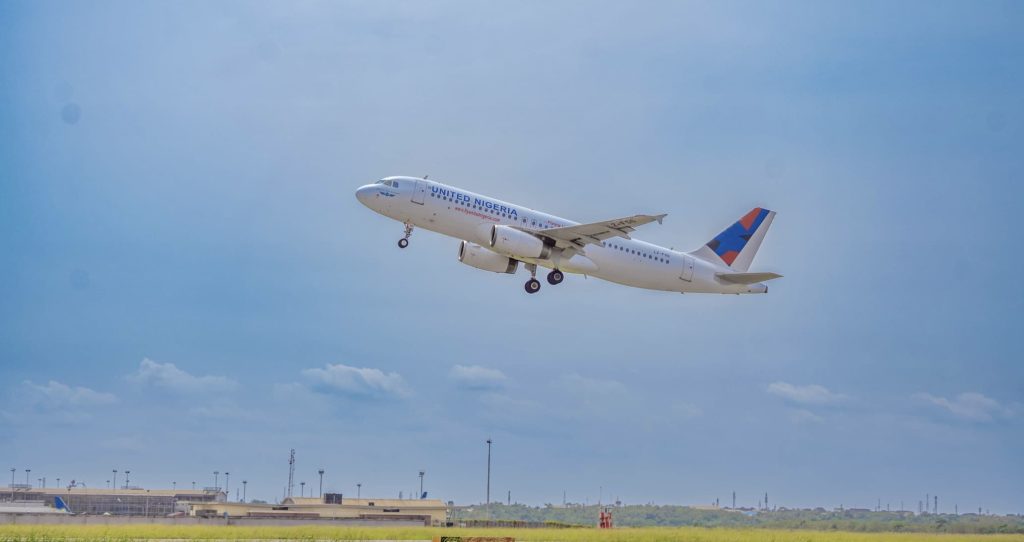
“United Nigeria Airlines has withdrawn a CRJ-900 aircraft from operation following a bird strike during the landing of Flight UN0579 from Kano to Abuja on Tuesday, April 14, 2026, marking the fifth such incident involving the carrier since January and prompting fresh warnings of possible schedule disruptions.
In a travel advisory issued Tuesday, the airline said the aircraft was struck while landing at Nnamdi Azikiwe International Airport, Abuja, at its scheduled 18:15 hours arrival from Mallam Aminu Kano International Airport.
And in line with safety protocols, United Nigeria said the jet has been “immediately withdrawn from operations to undergo comprehensive technical inspections and any required maintenance” before returning to service.

The airline acknowledged that the grounding could affect flights across its network, apologizing for “any inconvenience this unforeseen development may cause” while stressing that “safety remains our highest priority.”
Tuesday’s incident brings United Nigeria’s bird strike tally to five in just over three months of 2026.
While the airline stated that each occurrence has been “managed in full compliance with applicable aviation safety regulations and established operational procedures,” the frequency highlights a growing operational challenge for the carrier.
Bird strikes, though common in global aviation, force mandatory inspections that can sideline aircraft for hours or days, tightening fleet availability and triggering cascading delays, especially for airlines with limited spare capacity.
United Nigeria Airlines, founded in 2020 and based in Enugu, operates a fleet dominated by Embraer ERJ-145 and Bombardier CRJ-900 regional jets across domestic routes.
The carrier has expanded rapidly since its 2021 launch but, like other Nigerian operators, contends with wildlife hazards around airports, seasonal migratory patterns, and infrastructure gaps in perimeter control.
The Nigeria Civil Aviation Authority (NCAA) requires all bird strikes to be reported and aircraft inspected before further flight, regardless of visible damage.
For passengers, the immediate consequence is potential rebookings or cancellations as the airline adjusts its schedule to absorb the out-of-service CRJ-900.
United Nigeria reaffirmed its “commitment to maintaining the highest standards of safety and operational reliability” and said it will “continue to take all necessary measures to optimize our operations and exceed the expectations of our passengers.”
The airline did not disclose the extent of damage to the aircraft or the number of flights likely to be affected but passengers on United Nigeria flights are advised to confirm schedules with the airline before heading to the airport.
