
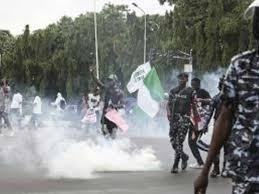
he Nigeria Police Force deployed tear gas on Monday to disperse peaceful protesters in the Maitama district of Abuja.
The demonstrators were advocating for immediate government intervention regarding deteriorating economic conditions, increasing repression, and concerns over the alleged misuse of the Cybercrime Act.
The protest was organized by the Take-It-Back Movement in collaboration with various civil society organizations as part of a nationwide demonstration. This event coincided with the National Police Day celebrations at Eagle Square, where top police officials were honored for their service.

To ensure security during the official ceremony, authorities established a blockade around the Three Arms Zone, anticipating attendance from high-ranking police officials. Among those participating in the protest was human rights activist and former presidential candidate Omoyele Sowore, who carried placards with slogans such as “Stop the Repression” and “Let Us Breathe.” These messages aimed to highlight what organizers described as an alarming trend toward authoritarianism under the current government.
Juwon Sanyaolu, National Coordinator of the Take-It-Back Movement, articulated several key issues that motivated the protest.
These included rampant inflation, widespread insecurity across Nigeria, and what he termed a “state of emergency” in Rivers State.
Initially peaceful, the demonstration turned chaotic when police began using tear gas canisters to break up the gathering.
Protesters were seen fleeing amidst rising tensions. As of now, there have been no confirmed reports of injuries or arrests related to this incident.
Interestingly, one of the intended destinations for protesters was the National Assembly complex; however, it remained largely empty due to an ongoing legislative recess. Lawmakers are not scheduled to return until April 29.
Despite this disruption, leaders of the protest maintained that their actions were both necessary and timely.
They emphasized that urgent government action is required to address escalating economic difficulties, insecurity issues, and perceived attempts to stifle dissent among citizens.
