

By Gboyega Adeoye
Every time a plane takes off or lands in Nigeria, a quiet but critical process has already taken place far below. Someone, somewhere, has made sure that nothing stands in the way. That no new mast, no high-rise building, no crane has crept into a flight path in a way that could endanger lives. That work belongs to the Nigerian Airspace Management Agency, NAMA. And as Nigeria’s cities grow taller and air traffic grows busier, the importance of that work, and the funding to sustain it, has never been more urgent.
The law is clear on this. The NAMA Act, 2022 vests the agency with the operational responsibility to carry out obstruction evaluation and aeronautical studies, to approve structures that may affect the safety of air navigation, and to collect Obstacle Evaluation Fees as part of its statutory revenue. These are not incidental duties. They are the frontline of aviation safety. Every tower evaluated, every clearance issued, every study completed is part of a chain that protects passengers, crew, aircraft and communities around airports.
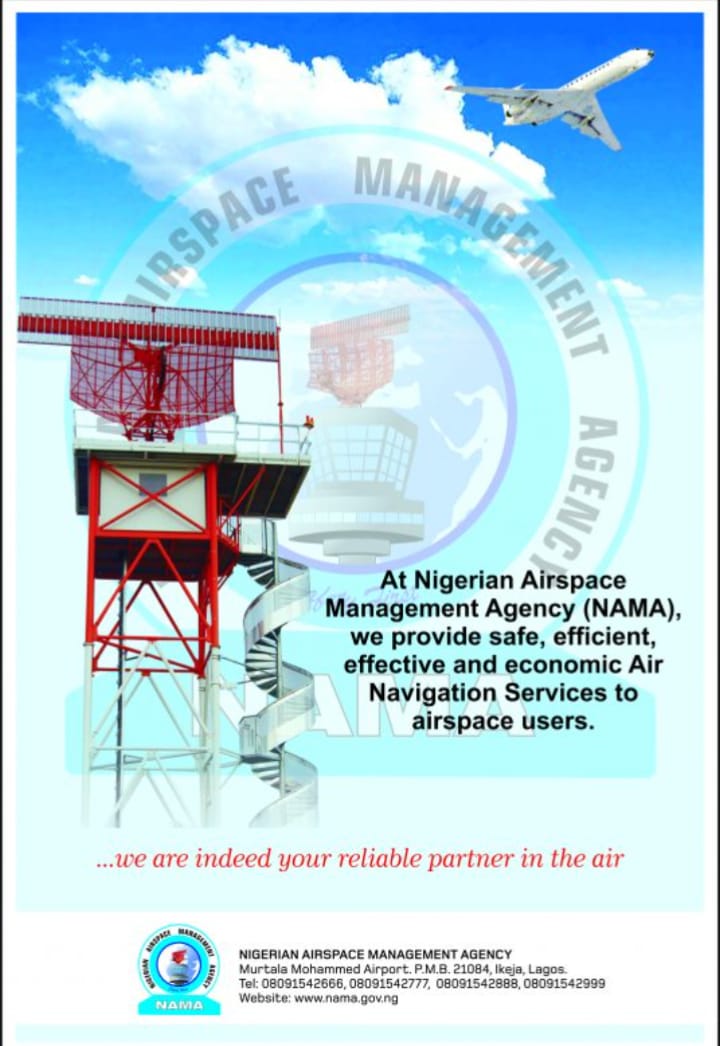
The fees collected for this service are not an afterthought. Globally, the principle is the same: the agency that delivers a specialized technical service should retain the cost-reflective revenue that makes the service possible. For NAMA, Obstacle Evaluation Fees go directly into maintaining and upgrading air navigation infrastructure, calibrating sensitive equipment, training engineers and air traffic professionals, and keeping Nigeria’s systems in line with International Civil Aviation Organization standards. In essence, the revenue is reinvested into safety.
When that funding is not fully available to the agency, the effect is not immediate, but it is cumulative. Maintenance gets stretched. Upgrades are delayed. It becomes harder to retain the skilled technical manpower needed to interpret data and make safety-critical decisions quickly. Over time, the capacity to deliver safe, efficient and internationally compliant air navigation services begins to erode. At a time when government is pushing for more air connectivity, increased cargo movement, and greater investor confidence in aviation and real estate, a financially stable NAMA is not a luxury. It is a necessity.
The Civil Aviation Act, 2022 gives the Nigerian Civil Aviation Authority a broad mandate for regulation and safety oversight. That role is vital and distinct. Across the world, aviation works best when the regulator sets standards and monitors compliance, while the service provider executes technical operations and funds them from service-related revenue. That separation ensures objectivity, prevents duplication, and gives investors clarity on where to go for what.
Aligning fully with the NAMA Act, 2022 will reinforce that clarity. It will remove grey areas that slow down approvals for developers, and it will give NAMA a predictable path to fund its core mandate without placing additional pressure on the national budget.
What this requires now is not conflict, but alignment. A clear policy directive from the Honourable Minister of Aviation and Aerospace Development, Mr Festus Keyamo (SAN), can reaffirm NAMA’s exclusive operational responsibility for obstruction evaluation and the collection of associated fees, while also restating NCAA’s important role as the independent regulator.
From there, both agencies can develop joint implementation guidelines that spell out timelines, processes and points of interface for developers and investors.
A transparent reconciliation mechanism can also ensure that revenues designated to NAMA under the Act are properly channeled going forward, restoring the agency’s ability to plan and invest with certainty.
The stakes are bigger than bureaucracy. Nigeria’s skyline is changing. Lagos, Abuja, Port Harcourt, Kano and other cities are seeing more high-rise development around airports. Telecoms infrastructure is expanding. Each new structure must be studied, and each study must be done with speed, accuracy and the right equipment. That takes money, expertise and institutional stability.
Ultimately, strengthening NAMA’s funding is about protecting lives and enabling growth. It is about making sure that as Nigeria builds upward, it does not compromise safety in the air. It is about giving an agency the tools to do the job the law has already assigned to it. The NAMA Act, 2022 has provided the framework. The next step is to align practice with that law, so that the agency can deliver fully, consistently and sustainably.
In aviation there is no room for error. Funding is not a side issue. It is the foundation. And a stronger, better-funded NAMA is how Nigeria secures its airspace for the travelers, businesses and cities of today, and for the generations still to come.
