
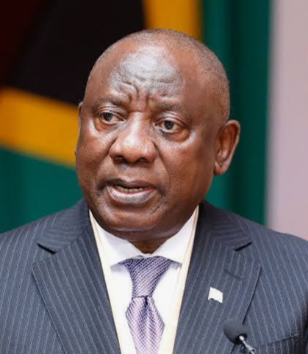
Ramaphosa: Face of a betrayer
258 Nigerians flee South Africa as MTN hands airtime to victims of a friendship betrayed
They landed at 10:30am on Thursday, June 10, 2026, at Murtala Muhammed International Airport. Two hundred and fifty eight men, women, and children. Nigerians who woke up weeks ago in Johannesburg, Pretoria, and Durban as traders, students, and tailors. They returned home as returnees. As evacuees. As proof that history has a cruel memory.

The Acting High Commissioner of Nigeria in Pretoria, Ambassador Temitope Ajayi, stood on the tarmac and called it what it was. “The journey is very long, and the people you see here today are our nationals, who have decided to come back to escape the irresponsible violence that has been taking place in South Africa,” he said. “They are in good spirits. They have been looking forward to being home since we started this process.”
This was the first batch. Four more flights will follow on June 15, June 18, June 22, and June 24. All by presidential order. “Mr. President has directed that all this must happen within the month of June,” Ajayi revealed.
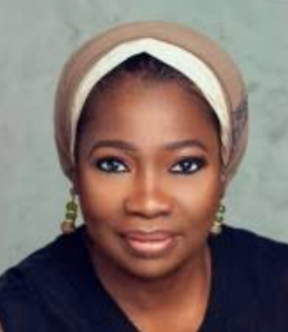
Dabiri
What the world did not see was the frantic diplomacy behind the chartered Air Peace flights. Ajayi pulled back the curtain in Lagos. It started in April when the crisis flared. “Mr. President established what we call a hotline communication between himself, the Ministry of Foreign Affairs and the mission in South Africa,” Ajayi said. “Every day he was on the phone asking the Minister and us what was happening on the ground and what he could immediately do to intervene. He directed us that we must be giving him an update every day, every minute.”
The pressure on President Bola Tinubu was global. “Mr President was put under tremendous pressure by the world leaders, even by the President of South Africa himself. He was asked to hold action on this, because of the image and the optics, the bad optics it has given to South Africa,” Ajayi disclosed. “But Mr. President was always very consistent. He said, any attack on my people in South Africa is an attack on me, and you must bring my people back.”
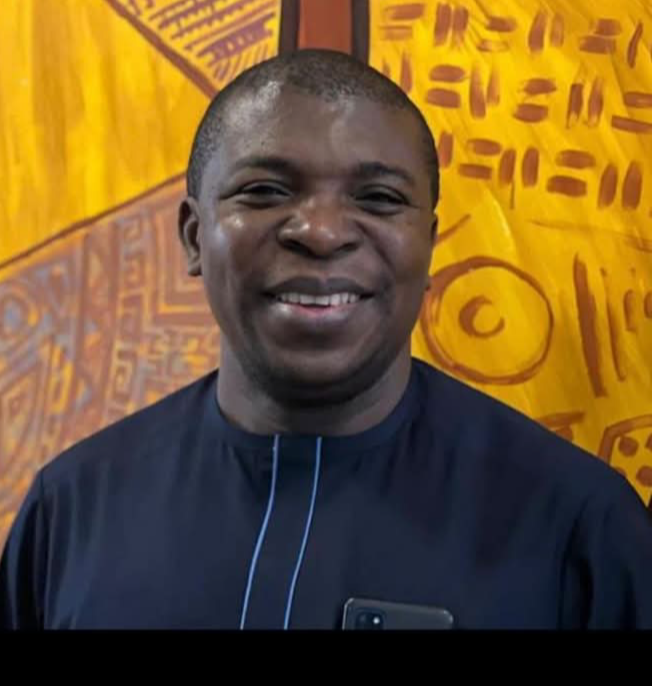
Ajayi
So Nigeria created crisis monitoring units across nine South African regions. It set up a three-stage screening process with South African Home Affairs, Immigration, and Intelligence. It secured five Air Peace flights. Because staying was no longer an option.
Here is the wound that refuses to heal. Nigeria did not just tweet support during apartheid. It bled money, diplomacy, and opportunity for South Africa’s freedom. From the 1960s to 1994, Nigeria led Africa’s anti-apartheid front. It set up the Southern Africa Relief Fund in 1976. Civil servants had 2% deducted from salaries. Students gave up their lunch money. Nigeria donated over $61 million to the liberation struggle, provided passports to ANC exiles, and gave Mandela’s movement a home when the world called them terrorists.
Thabo Mbeki lived in Lagos. Nelson Mandela thanked Nigeria first after his release. Nigeria chaired the UN Special Committee Against Apartheid for 25 years. It paid the price. South Africa’s apartheid regime backed coups against Nigeria. It armed enemies. Yet Nigeria kept giving.
And after 1994? Nigeria opened its market. South African companies flooded in. MTN, Shoprite, Multichoice, Standard Bank, Protea Hotels. They found a nation of 200 million people and a government that rolled out the red carpet. MTN Nigeria today is the MTN Group’s gold mine. Over 77 million subscribers. Trillions in revenue. In 2025 alone, MTN Nigeria made more money than MTN South Africa.
That is the “bad optics” Ajayi mentioned. South African businesses eat from Nigeria’s table, while Nigerian bodies are dragged on South African streets.
The returnees carry the receipts. Chinedu Okoro, 41, owned a phone accessories shop in Hillbrow. He came back with one duffel bag and his 8-year-old daughter. “They came at night. They said we are taking their jobs. They burnt everything. Police stood and watched. My daughter asks me every day when we are going back to our house. I have no house there again.”
Amina Bello, 29, was studying nursing in Pretoria. Her residence permit expired while Home Affairs sat on her renewal for three years. “They call us undocumented, but I applied in 2023. They never gave me an answer. Then they said I am illegal. I was arrested twice this year. I am not a criminal. I am a student.”
Ajayi confirmed her story. “Many of these people you are seeing here are not undocumented persons. Many of them became undocumented because of systemic failures of South African Home Service. Some have submitted requests for the extension of their resident permits. For years, it takes two years, three years, five years. So in the process, they were caught up in this.”
He pushed back hard on South African officials who briefed the press before the plane landed. “It is false and totally misleading for a body of officials to mention that 258 Nigerians that came were undocumented in South Africa. I stand to disagree with that. We all agreed to that protocol that we are not going to talk to the press. I don’t want them to politicise this kind of operation. It’s beyond politics. We should not take vulnerability of people to turn into spectacle.”
Then came the moment that defined the day. Mrs. Abike Dabiri-Erewa, Chairman of the Nigerians in Diaspora Commission, announced the welcome packages. The Federal Government was giving N100,000 to each returnee. Governor Hope Uzodimma of Imo State pledged N1 million each.
And MTN, the South African telecom giant, was on the tarmac. “MTN is here, and we’ve been working with them,” Dabiri said. “They are going to transfer to your account a hundred thousand Naira each for every one of you. And that’s not all, they are going to give you N15,000 airtime. And they will also be giving you starter packs, so you can have phones to use when you get home.”
There it was. A South African company handing cash and airtime to Nigerians fleeing South Africa. The same MTN that cannot operate in Johannesburg townships without armed guards was funding the soft landing of victims of South African violence.
The Minister of State for Foreign Affairs spoke with the measured tone of diplomacy, but the pain was clear. “It is with mixed feelings that I address you this afternoon, happy to welcome you,” he said. “I’m a little bit not so happy because I know the kind of trauma that my people went through. Mr. President has asked me to welcome you back home. Home is home.”
He promised action. “We believe in diplomacy. We believe in engagement. We believe in dialogue. We are going to activate these mechanisms. So that we can respond more quickly. In a more proactive manner to situations that may occur in the future.”
There are two mechanisms, the Minister said. The Bi-National Commission and the Early Warning Mechanism. Papers signed. Handshakes done. But on the streets of Berea and Sunnyside, Nigerian shops still burn.
Nigeria has paid its dues to South Africa. In cash. In blood. In brotherhood. What it gets back are body bags, burnt stalls, and returnees with MTN SIM cards.
As the 258 walked into the MMIA terminal, one of them, a young man who gave his name only as Emeka, looked at the MTN banner and said, “They beat us there. They pay us here. Which one is true?”
That is the question. From apartheid’s debt to xenophobic payback. From hotlines in the Villa to airtime on the tarmac. Nigeria keeps giving. South Africa keeps taking. And 258 Nigerians just came home to ask why.
