
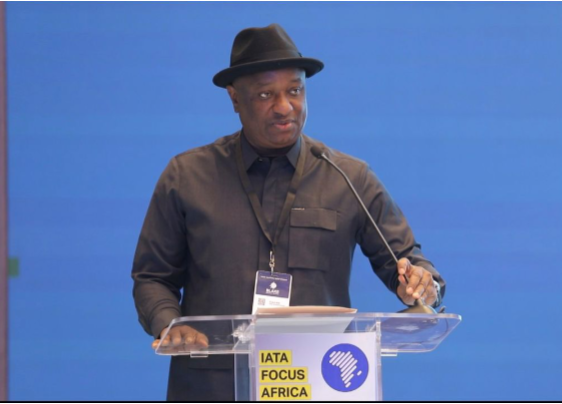
Festus Keyamo (SAN)
After 20 years of court battles, airport politics, and billion-naira debt, Nigeria’s most contentious concession finally lands
For two decades, the name “MMA2” has been more than an airport code. It was a courtroom. A political battlefield. A monument to how Nigeria treats its best deals.
It began in 2000, when a Lagos lawyer named Wale Babalakin walked into a government office and walked out with a 36-year contract. His company, Bi-Courtney, would build and run the Murtala Mohammed Airport 2.
Wale Babalakin (SAN)
The deal was clear: he would run the new terminal, the General Aviation Terminal at the local airport, and have sole rights to operate airports in Lagos. It was a public-private partnership Nigeria had never seen before.
MMA2 opened in 2007. Gleaming, private, and efficient, it was instantly the best terminal in the country.
But almost immediately, the state began to chip away at the agreement. The GAT was taken away. The sole rights were ignored. Regional flights, the lifeblood of any terminal, were denied. Instead, the government opened the old General Aviation Terminal to airlines, in direct breach of the contract it had signed.
Babalakin sued. And he won.
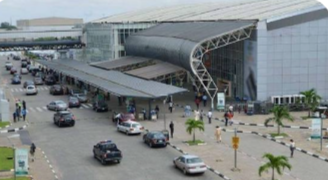
MMA2
In 2020, the Supreme Court ruled that the Federal Government had breached the concession. It awarded Bi-Courtney ₦132 billion in damages. The case was over, but the airport was still stuck. The money judgment was there, but the original deal was dead. Nigeria had paid the price for breaching its word, yet the airport remained broken.
The stalemate lasted until Thursday.
At the Federal Executive Council meeting, the war ended with a single decision. In exchange forfeiting the ₦132 billion judgment, Babalakin gets back what he says the state stole: the right to build the five-star hotel and international conference centre he was forced to abandon 20 years ago, the right to handle regional flights from MMA2, and a green light to expand his tarmac. He has 24 months to complete the hotel. Regional flights can begin as soon as the Nigerian Civil Aviation Authority gives the operational go-ahead.
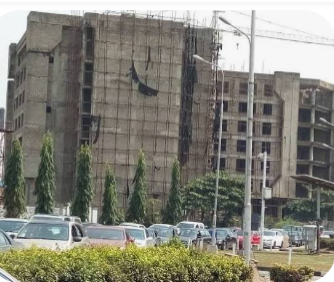
The abandoned project
The concession, once the poster child for “reckless allocation of contract,” now has a human face. The face belongs to Minister of Aviation and Aerospace Development, Festus Keyamo.
“This is about correcting a situation created by one government allocation of contract,” Keyamo told reporters after the FEC meeting. Surely, a country cannot grow if you sign agreements and then violate them. Since taking office, Keyamo has made undoing legacy aviation disputes a priority, from the Nigeria Air debacle to this one.
The settlement is not a cash payout. It is a restoration of value. The government pays nothing upfront. Instead, it gives back the economic heart of the deal. Babalakin forfeits the money judgment, but gets the business back.
The implications go beyond one terminal. For years, foreign investors have pointed to the MMA2 dispute as proof that contracts in Nigeria are not worth the paper they’re printed on. The World Bank’s 2023 PPP readiness assessment flagged “arbitrary contract abrogation” as a key deterrent. The Bi-Courtney case became the cautionary tale.
Now, it could become the turnaround story.
“This is a signal to the market,” says aviation analyst Olumide Ohunayo. “If you win in court and the government still won’t pay, why invest? But if you can renegotiate and restore value, then Nigeria becomes bankable again.”
The regional flight approval is also strategic. MMA2 is currently domestic-only. Opening it to regional routes will immediately ease pressure on the congested Murtala Mohammed International Terminal and give Lagos a real shot at becoming a West African hub. The tarmac expansion means more aircraft, more passengers, more revenue.
The five-star hotel and conference centre, long abandoned, may finally become the missing link that turns MMA2 from a transit point into a destination. Aviation insiders say the hotel will make MMA2 the first Nigerian airport terminal with a built-in international conference facility, a game-changer for business travel in West Africa.
“We are not celebrating victory over the government,” Oluropo Owolabi, Non-Executive Director, Skyway Aviation Handling Co Plc, says. “We are celebrating victory for the Nigerian aviation sector.”
For Keyamo, the deal is part of a larger reset. “I don’t want to be the minister who inherited dead projects,” he said. “I want to be the minister who gave them life.”
The tarmac war is over. But the real work begins now.
If the hotel rises and the regional flights land on schedule, Nigeria will have proof that even the most bitter infrastructure disputes can be settled without litigation. If it stalls, the message will be the same as it was 20 years ago: in Nigeria, even Supreme Court wins don’t guarantee peace.
For now, at least, the tarmac is quiet. And the planes are watching.
